| Brand/Manufacturer | Midmark |
|---|---|
| SKU | Ritter 230 Procedure Chairs |
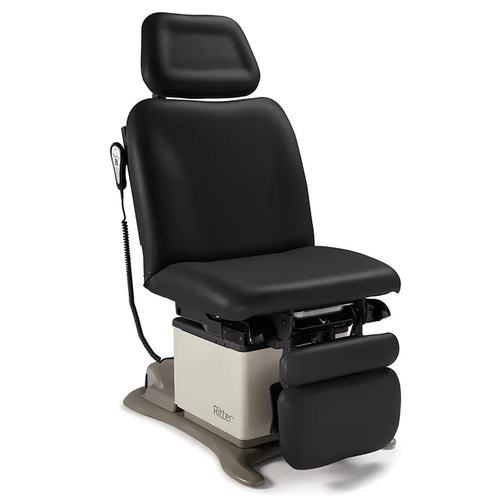
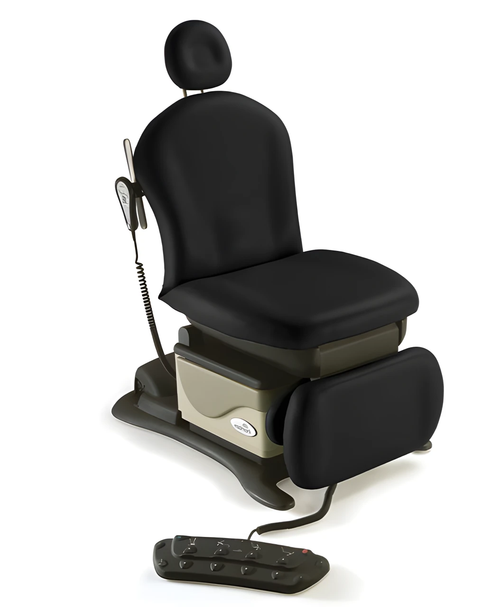
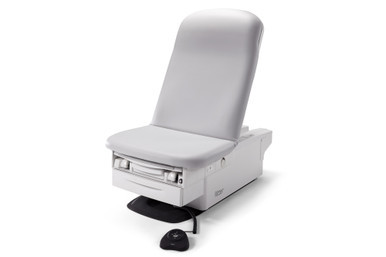
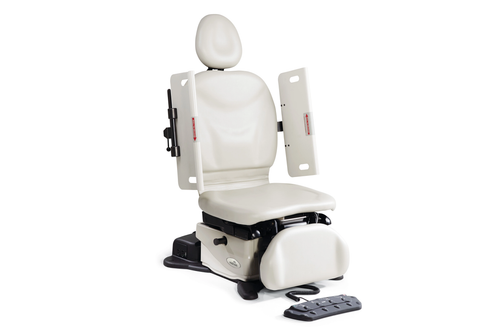
The Ritter® 230 Procedure Chair by Midmark is a fully powered medical procedure chair designed to provide precise patient positioning, comfortable patient support, and improved clinician access for a broad range of outpatient procedures. With powered height, back, foot, and tilt adjustments, a 450 lb patient weight capacity, standard wired hand control, integrated stirrups, and knee-chest positioning capability, the Ritter 230 provides the positioning flexibility needed for many in-office and ambulatory procedures.
Available in standard, electrical-receptacle, and rotational configurations, the Ritter 230 allows healthcare facilities to select the level of functionality appropriate for individual procedure rooms while maintaining a consistent chair platform.
The Ritter 230 provides powered height, back, foot, and tilt adjustment, allowing clinicians to precisely position patients for a variety of outpatient procedures.
Instead of manually repositioning individual chair sections, the provider can use the standard hand control to adjust the patient's position according to the procedure being performed.
The powered platform supports several useful clinical positions, including Chair Entry, Elevated Flat, Lithotomy, Knee-Chest, and Trendelenburg positioning.
This flexibility allows the same chair to support multiple procedures while helping clinicians establish an appropriate working height and viewing angle.
Patient positioning can directly affect how closely a clinician can work to the procedural site. The Ritter 230 is designed to help position both the patient and caregiver appropriately during in-office procedures.
Powered height and tilt allow clinicians to bring the procedural site closer to an ergonomic working position rather than repeatedly bending, reaching, or adjusting their own posture around a fixed-height surface.
The chair can also be raised for procedures where better access to the patient's head, neck, or torso is needed.
The Ritter 230 can be positioned upright to provide a more natural chair-like entry and exit position.
Rather than requiring the patient to climb onto a traditional flat procedure table, the chair can be positioned so the patient approaches and sits in a familiar seated orientation.
Once the patient is seated, powered positioning can be used to transition the chair into the appropriate procedural position.
The Ritter 230 can be positioned into an elevated flat configuration, creating a horizontal patient support surface while allowing the clinician to adjust its working height.
This position can improve access and visibility when performing procedures involving the patient's head, neck, torso, or other areas requiring a flat patient position.
Integrated stirrups and powered positioning allow the Ritter 230 to support lithotomy positioning for applicable lower-body procedures.
The chair can position the patient supine while providing clinician access to the lower body, expanding the 230's usefulness beyond general examinations and basic seated procedures.
A significant capability of the Ritter 230 is its knee-chest configurable design.
Knee-chest positioning can provide access to the lower body while the patient is positioned prone. This makes the 230 adaptable to certain specialty examinations and procedures that cannot be performed effectively with a conventional examination chair.
Powered tilt also allows the Ritter 230 to support Trendelenburg positioning.
This provides additional flexibility for lower-body procedures and other clinical situations where the patient's body needs to be positioned with the head lower than the feet.
Combined with powered back and foot adjustment, the tilt system allows clinicians to transition between several procedural positions without manually repositioning the patient support sections.
A wired hand control is standard on the Ritter 230.
The control is positioned for convenient clinician access and provides control over the chair's powered functions, allowing the provider to adjust the patient's position as procedural requirements change.
A foot control is also available as an accessory for practices that prefer hands-free chair adjustment.
The Ritter 230 supports patients weighing up to 450 lb (204 kg).
The combination of this weight capacity and powered positioning allows the chair to accommodate a broad patient population across general outpatient and specialty procedure environments.
The Ritter 230-003 incorporates a rotational base that allows the chair to rotate up to 350 degrees.
Rotation can be particularly valuable in procedure rooms containing lights, instrument stands, carts, imaging equipment, or other devices. Rather than repeatedly moving heavy equipment around the patient, the clinician can change the orientation of the patient within the procedure space.
The rotational base adds approximately 3.5 inches to the minimum and maximum seat heights, giving the 230-003 an approximate height range of 27.5 to 43.5 inches.
The Ritter 230-002 includes hospital-grade duplex electrical receptacles on both sides of the chair.
These receptacles provide convenient access to power for compatible equipment and accessories used during medical procedures, helping reduce dependence on more distant wall outlets.
Electrical receptacles are not available on the rotational 230-003 configuration.
An optional Adjustable Arm System provides patients with a stable support surface when entering the chair and can offer an additional sense of security during positioning.
The arms can rotate and lock into three different positions and can be removed without tools.
This allows the arm configuration to be changed according to the patient's needs or the procedure being performed while preserving clinician access when the arms are not required.
The Ritter 230 is available with seamless upholstery, providing a smooth patient support surface designed for medical environments.
A 28-inch seamless UltraFree™ upholstery top is also available for facilities seeking a PVC-free upholstery option.
The removable upholstery sections also simplify access when replacement or servicing is required.
Stirrups are standard equipment on the Ritter 230.
The integrated stirrups support lower-body positioning and help expand the chair's versatility for procedures requiring patient leg support.
Combined with powered foot, back, height, and tilt positioning, the stirrups allow the chair to support a wider range of outpatient procedural applications.
A standard paper roll holder accommodates an approximately 18-inch-wide by 3.5-inch-diameter paper roll, allowing disposable examination paper to be incorporated into routine room turnover and patient preparation workflows.
Optional locking casters can be added when mobility within the procedure environment is needed.
The caster system adds approximately 3.5 inches to the minimum and maximum seat height and creates additional clearance beneath the chair for equipment such as Mayo stand legs.
This can provide greater room-layout flexibility while maintaining the ability to secure the chair during procedures.
The Ritter 230 supports a variety of accessories that allow the chair to be adapted to different specialties and procedural workflows.
Available accessories include:
These accessories allow healthcare facilities to configure individual Ritter 230 chairs around the requirements of specific procedure rooms.
All three configurations provide the core Ritter 230 platform with powered height, back, foot, and tilt positioning, 450 lb capacity, knee-chest capability, and standard wired hand control.
The primary differences are straightforward:
Ritter 230-001
Provides the standard powered procedure-chair platform and is well suited for facilities that do not require chair-mounted electrical receptacles or rotational positioning.
Ritter 230-002
Adds hospital-grade duplex electrical receptacles on each side of the chair, providing convenient power access for compatible procedural equipment.
Ritter 230-003
Adds a 350° rotational base, allowing clinicians to change patient orientation within the procedure room without repositioning the entire chair or surrounding equipment.